




- AI SDLC
Ready to Scale AI Across Your Delivery Ecosystem?
Indium’s AI-led SDLC provides the structure, context, and governance needed to expand AI adoption—from pilot to enterprise scale in weeks.
Connecting the Dots in Your Development Process
Tool & Reasoning Sprawl
Multiple AI tools and LLMs operate across teams without shared context or control.
Consequence: Costs rise, outputs vary, and teams stop trusting what AI produces.
Contextual Blindness
AI works without full product, architecture, or business context understanding. Consequence: Code, tests, and decisions drift.
Fragmented Delivery
Development, testing, and release still run in disconnected stages. Consequence: Handoffs slow everything down, and delays stack up.
AI-Led SDLC to Replace Linear Cycles with Adaptive Delivery Systems
01
Autonomous Lifecycle Orchestration
Connects every phase of delivery, from business intent to production, creating a unified, machine-speed pipeline that eliminates traditional manual handoffs.
02
Context-Aware Intelligence
Grounds development in context-driven specifications to ensure alignment with business logic and enterprise standards. The emerging Context Graph combines LLMs with enterprise context to reduce rework, lower failures, and accelerate agility.
03
Strategic Governance
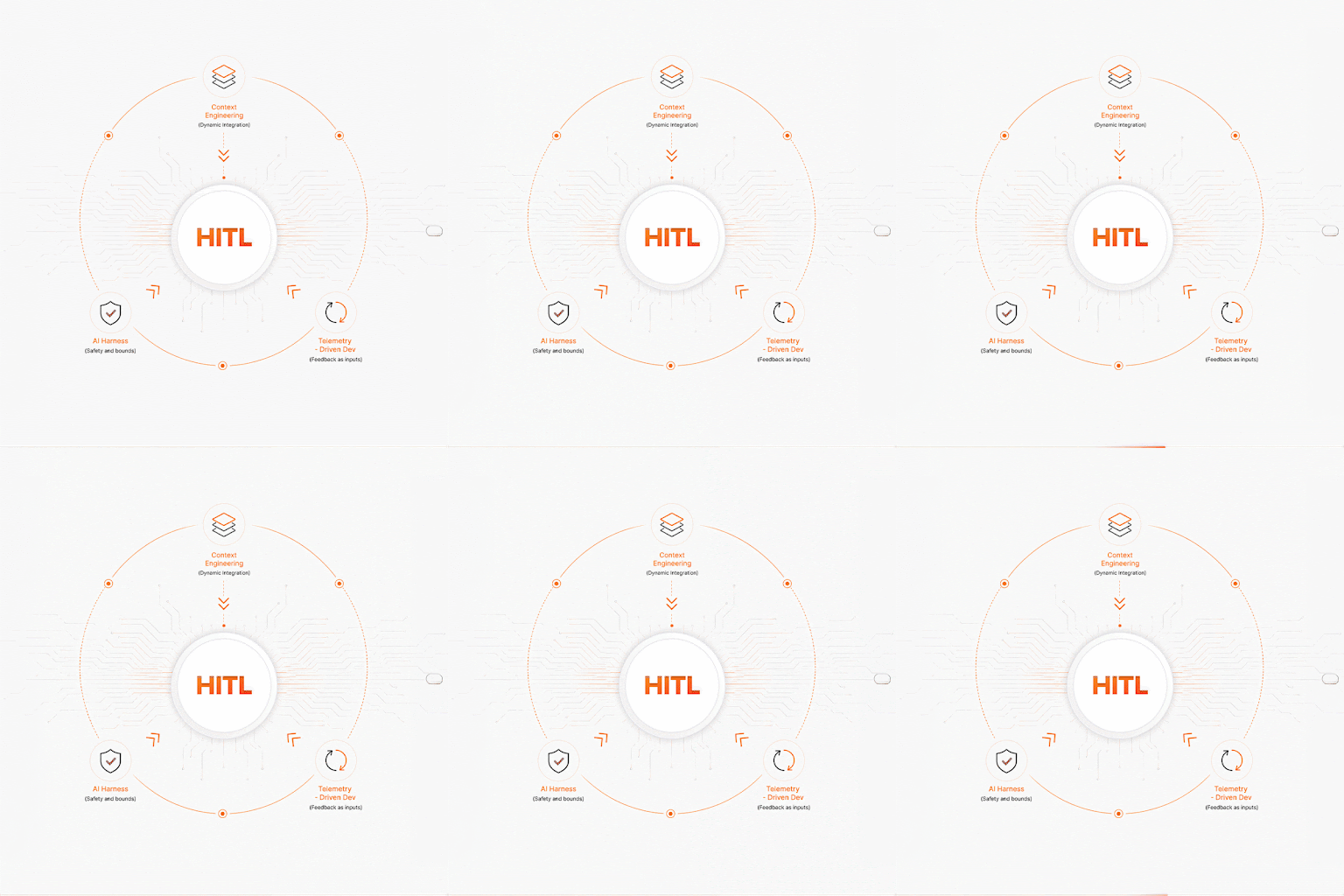
Embeds continuous AI telemetry and human-in-the-loop verification to provide total transparency, predictive risk management, and uncompromised quality across global teams.
04
Hyper-scaler fluency
We speak AWS, Azure, and GCP natively with Databricks, Snowflake, and Striim partnerships that go beyond certifications.
05
Genuinely agile
We deliver value in iterations and adjust as priorities shift. Your roadmap is a living document, not a contract that locks you in.
06
Business outcomes first
Every architectural decision is filtered through your business goals. We don't modernize for its own sake, we modernize for results.
AI-Led SDLC Solutions Delivered Across Two Programs
Each solution takes you from early AI adoption to consistent, enterprise-ready delivery without disrupting your existing workflows.
6 to 8 Weeks to Establish AI-Native SDLC Foundations
AI agents start by assessing your workflows and baseline metrics, then set up an AI-augmented development environment with structured engagement plans. As a result, you get a production ready AI-enabled SDLC setup with defined workflows.
Pilot AI Workflows and Define Scale Roadmap
AI-driven sprints begin with your teams, with specifications refined through feedback/KPIs, and governance set up to support autonomous SDLC. This establishes validated use cases and visible improvements in delivery.
3+ Months to Scale AI Across Delivery Systems
You can institutionalize AI-SDLC practices, expand automation, and standardize workflows across engineering teams. Delivery becomes consistent, automation coverage expands, and AI integrates into everyday engineering workflows.
AI-Native POD Driving End-to-End Delivery
A cross-functional team supports your context-aware development, continuous validation, and reliable deployment. We set up an operational AI-native delivery unit with defined roles, and controlled execution.
Get Precise Outcomes with Minimal Cognitive Load
Delivery Throughput
Launch more features per sprint with shorter cycle times
Increase in Developer Productivity
Cut repetitive work for your developers and keep them focused on high-value tasks
Defect Detection Efficiency (DDE)
Identify defects early and reduce production issues
Cycle Time & Release Velocity
Reduce feedback time & release faster across stages
Automation Coverage
Automate testing and validation workflows to speed up delivery across every stage
Observability & Decision Signals
Get clear performance insights to drive faster decisions
Engagement Model Built Around Your Feedback and Context

Context-Driven Execution
Anchors every output in project-specific architecture and business logic, eliminating gaps caused by generic AI usage.

Feedback-Led Improvement
Replaces linear delivery with continuous loops that refine outputs based on system behavior and real usage signals.

Controlled AI Adoption
Brings fragmented tools and models into a structured system with defined roles, reducing sprawl and unmonitored usage.

Human-Guided Validation
Applies oversight to review throughput, validate AI effectiveness, and ensure alignment with enterprise standards.